-
Katarina Vuletic e Stefano Mauro
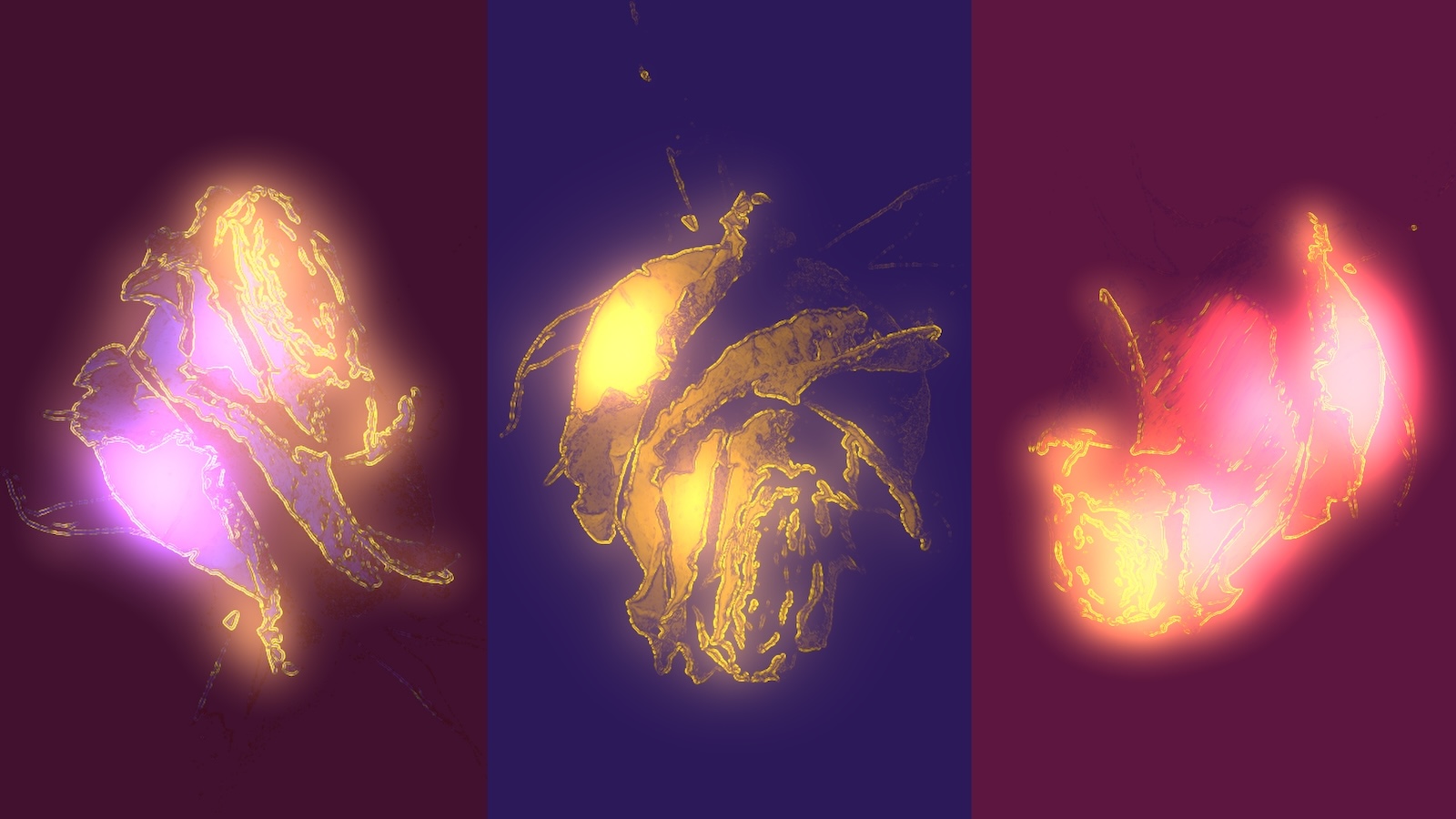
VETTORI BIOTICI (2026)
Interactive multimedia installation (Trieste Next 2026)
Inspired by the communication via electromagnetic fields between bees and flowers, this installation is designed to interconnect the perceptual world with the digital world. Through tracking technologies and generative algorithms, it integrates body movements with the dynamic evolution of visual and auditory elements, creating an interaction that is constantly changing. -
Katarina Vuletic
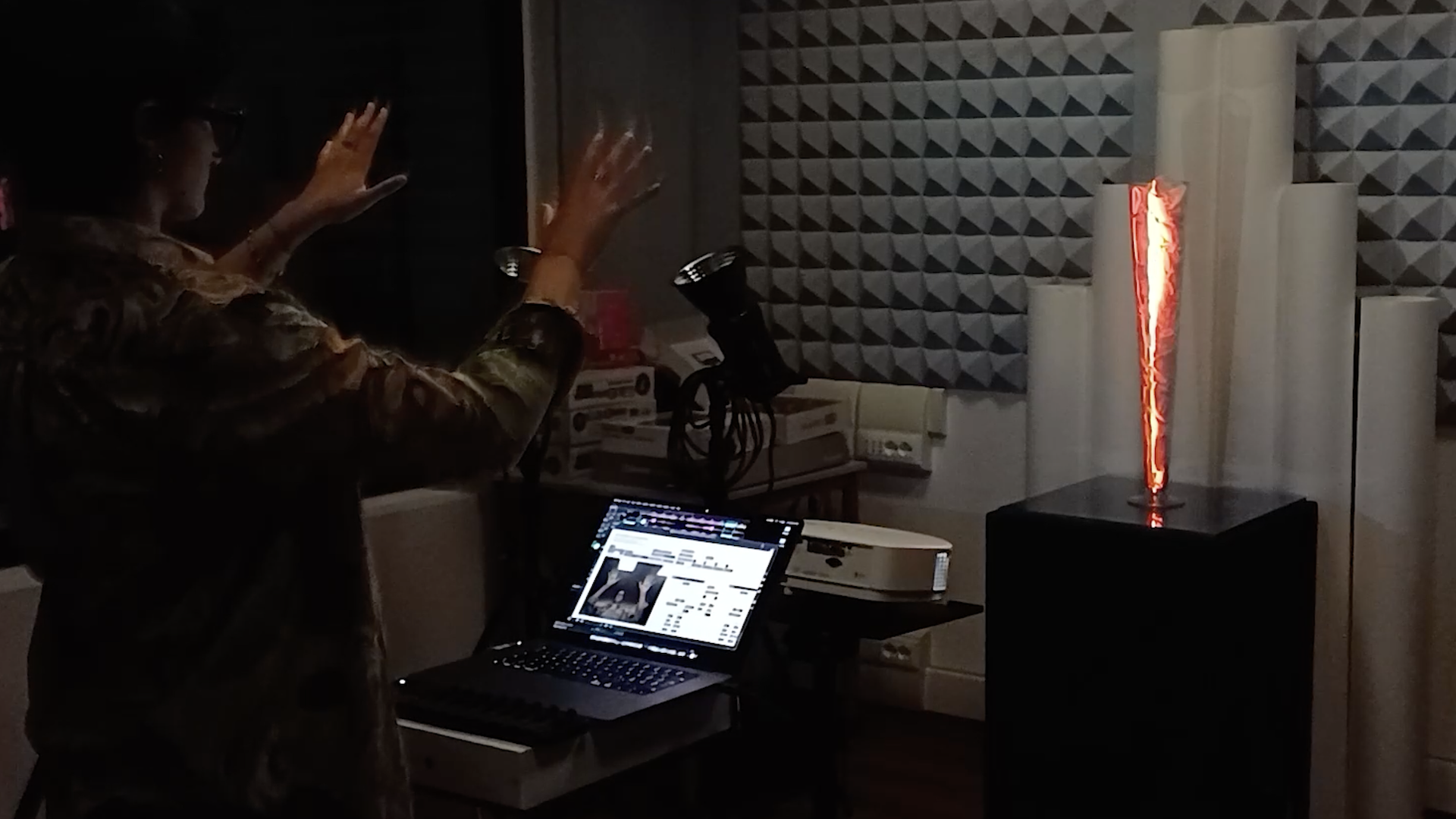
ECHI SOSPESI (2026)
Interactive multimedia installation (Conservatorio Tartini - Open Day 2026)
Echi sospesi is an interactive multimedia installation that allows visitors to explore five scenes, in which they can navigate and interact with visual and acoustic processes through gesture. The concept evolved from free experimentation with generative visual materials. It is a meticulous exploration in which form is the foundation of everything, modified and adapted to achieve a specific and coherent aesthetic vision; even the surface, a glass, was chosen with experimentation in mind, focusing on forms and the play of light created by diffraction.
The various environments range from abstract imagery to clear moments composed of well-defined graphic elements. Fluid images alternate with raw, digital “landscapes” based on shades of gray, where the only color is an intense red that breaks the monochrome. You find yourself suspended in a surreal world, made up of misty and turbulent visions, and the sound—at times calm and minimalist—accompanies you and invites you to 'lose yourself' for a moment in a world guided solely by your own sensations. -
Giovanni Asquini
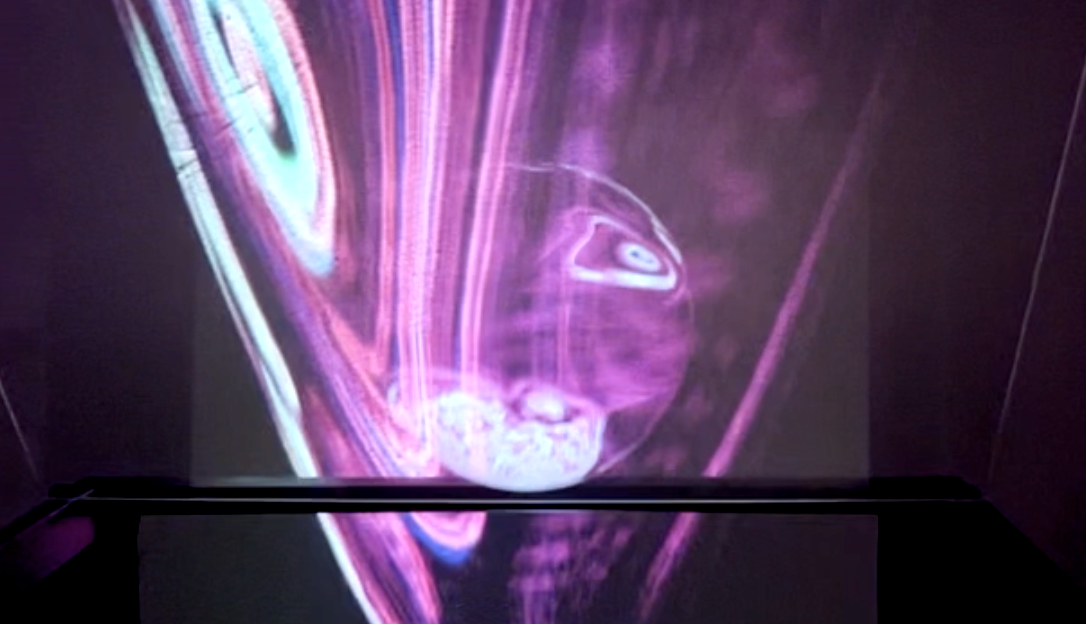
SYN-AISTHÀNOMAI (2024)
Interactive multimedia installation (Trieste Next 2024)
The installation Sýn-Aisthánomai is based on the correspondence between sound and colour. Drawing on Newton's theories of the relationships linking the frequencies of the light spectrum to those of the audible spectrum, and developing them artistically through the studies and works of Kandinsky and Scriabin, it establishes a system of synaesthetic correspondences between sound, light, colour and image: a virtual 'instrument' through which the timbral experience of different sound mixtures can be interacted with and perceived visually and sensorially.